
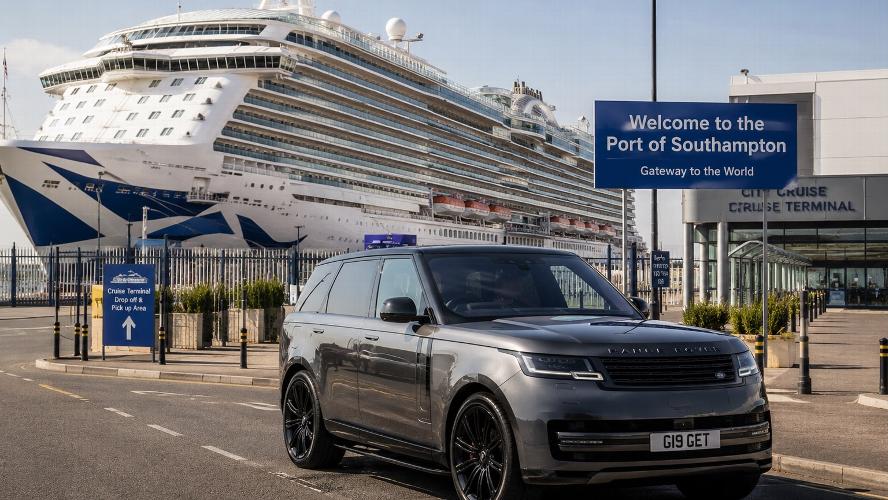
For many passengers, arriving back into the Port of Southampton marks the end of a fantastic cruise. For others, it's the start of the next part of their holiday, whether that's travelling to the airport, staying locally or exploring southern England before heading home.
Knowing what happens after your ship arrives alongside makes the whole process much less stressful.
This guide follows the same journey you'll take after your ship arrives in the Port of Southampton, from disembarkation through to meeting your onward transport.
1. YOUR SHIP HAS ARRIVED. WHAT HAPPENS NEXT?
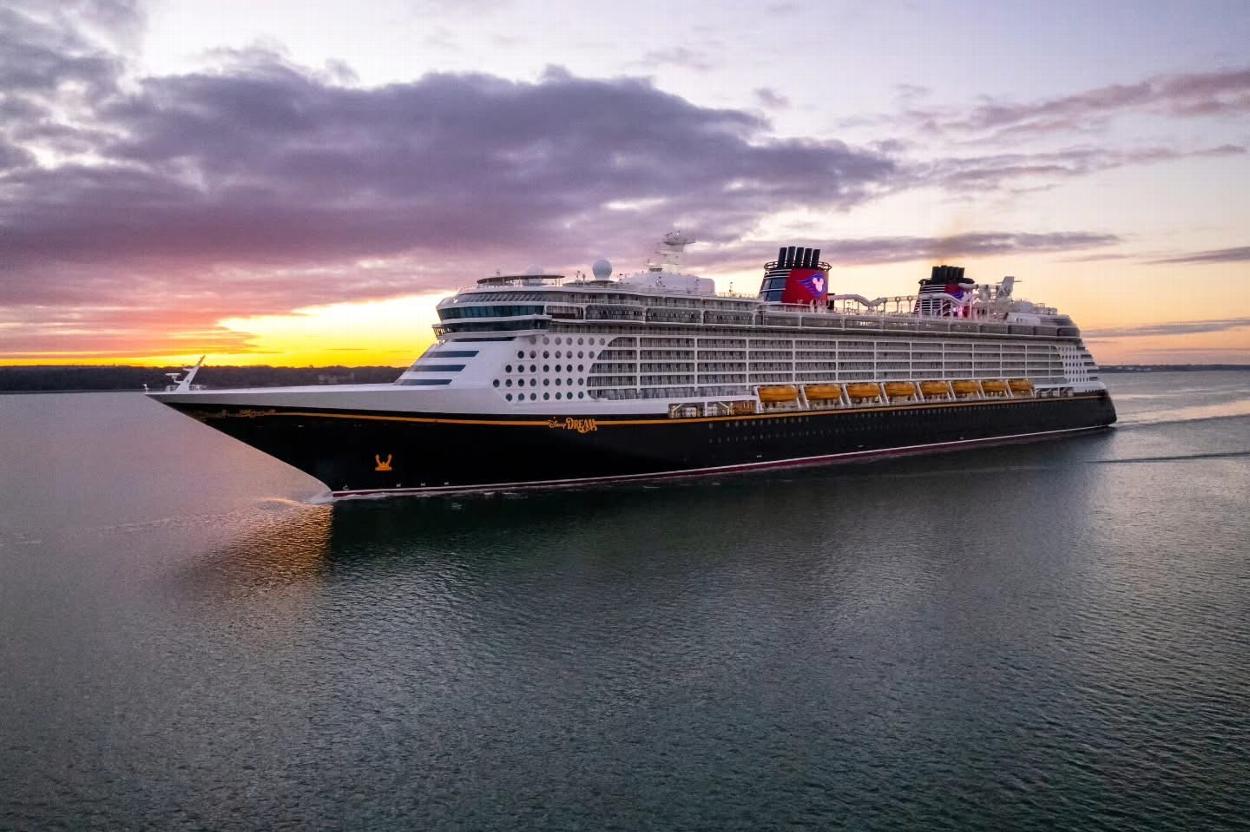
Most cruise ships arrive into the Port of Southampton early in the morning, often between 5:00 am and 7:00 am. You can check the Southampton cruise ship schedule for planned arrivals.
Although the ship may already be alongside the quay, passengers cannot usually leave immediately.
Before disembarkation begins, several things need to happen:
• The ship must be securely berthed.
• The gangways must be positioned.
• Before passengers can leave the ship, the vessel must be cleared for disembarkation. Depending on the voyage, this may include UK Border Force and port arrival procedures.
• The cruise line gives clearance for passengers to leave.
Only once these steps are complete will disembarkation begin.
Your cruise line will usually have allocated a disembarkation time based on factors such as:
• Self-assist luggage
• Checked luggage collection
• Flight times
• Accessibility requirements
• Loyalty status
It is worth waiting for your group to be called. Leaving your cabin too early usually means sitting in a crowded public area with everyone else waiting.
2. LEAVING THE SHIP
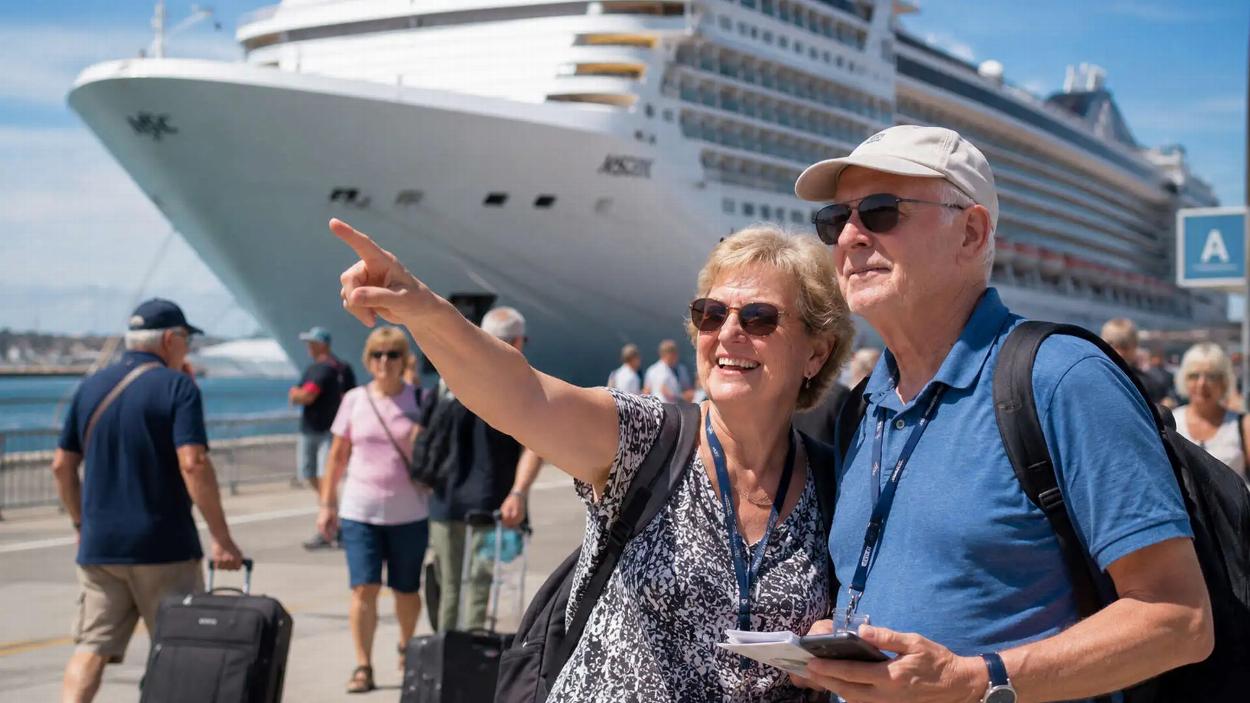
When your group is called, you'll make your way to the gangway with your hand luggage.
If you chose self-assist disembarkation, you will take all of your luggage with you.
This is often the quickest way to leave the ship if you are comfortable handling your own cases.
If you chose standard luggage collection, your larger suitcases will normally have been taken off the ship overnight. You will collect them inside the cruise terminal before leaving.
The walk from the ship into the terminal is normally short and fully accessible.
Port staff are positioned throughout the route to direct passengers.
Travelling to Heathrow or Gatwick?
If you have an early flight to catch, consider using self-assist disembarkation if your cruise line offers it.
Instead of placing your tagged luggage outside your cabin the evening before arrival, keep your luggage with you overnight. Once the gangway opens and you've cleared any required Border Force or Customs procedures, you can leave the ship without waiting to collect checked baggage inside the terminal.
This option is best suited to passengers who can comfortably manage all of their own luggage.
3. INSIDE THE CRUISE TERMINAL
Once inside the terminal, the process is usually straightforward.
If you've checked luggage, you'll enter the baggage collection area where suitcases are organised into numbered sections.
Finding your luggage is usually straightforward.
Before leaving the building you may also encounter:
• Customs
• Security staff
• Cruise line representatives
• Port staff available to answer questions
Most passengers move through the terminal quite quickly.
However, this can vary depending on:
• The number of ships in port
• Passenger volumes
• Customs activity
• Whether coaches are loading at the same time
Take a few moments to check you've collected everything before leaving the building.
It is much easier to resolve a missing luggage issue while you're still inside the terminal than after you've left.
4. LEAVING THE TERMINAL
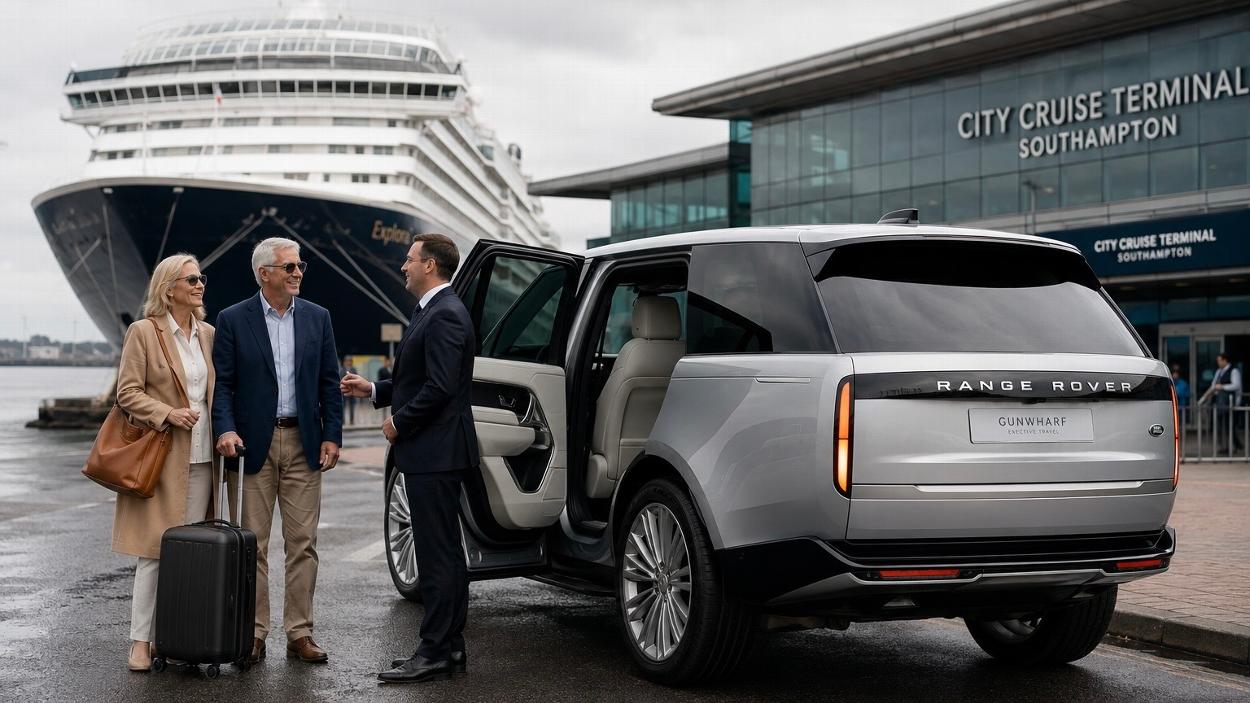
Once you step outside, you'll enter the collection area.
This is where different forms of onward transport begin to separate.
Depending on your plans, you may see:
• Family and friends collecting passengers
• Chauffeurs
• Local taxis
• Hotels operating shuttle services
• Cruise transfer coaches
• Private vehicles
This is often the busiest part of the journey.
Hundreds, sometimes thousands, of passengers may be leaving the terminal within a relatively short period, particularly when several cruise ships are in Southampton on the same morning.
It can appear busy at first, but traffic and passenger movements are generally managed by port staff.
If you've arranged private transport, avoid feeling rushed.
Take a moment to orientate yourself before contacting your driver if that has been agreed.
Using a Local Taxi
Southampton's licensed city taxis are easy to recognise as they are typically white.
During busy cruise arrivals, taxi ranks can become extremely busy, particularly when several ships are in port.
Before beginning your journey:
• Ask for an estimated fare to your destination.
• Make sure the taximeter is switched on before the journey starts.
• If you're travelling a long distance, agree how the fare will be calculated before you leave.
5. MEETING YOUR CHAUFFEUR
One of the most common questions passengers ask is:
"Where exactly do I meet my driver?"
The answer depends on which Southampton cruise terminal your ship is using.
Each terminal has its own collection arrangements.
Southampton has five main cruise terminals:
• City Cruise Terminal
• Horizon Cruise Terminal
• Ocean Cruise Terminal
• Mayflower Cruise Terminal
• QEII Cruise Terminal
The collection point differs between terminals, so knowing which terminal your ship is using is important. Gunwharf Executive Travel confirms the appropriate meeting arrangements with passengers before collection.
A professional chauffeur will normally:
• Monitor your ship's arrival.
• Be nearby before disembarkation.
• Keep in contact with you.
• Know the terminal's designated collection arrangements.
If you're travelling with Gunwharf Executive Travel, we'll normally establish contact with you via WhatsApp the evening before your arrival.
We'll confirm:
• Your chauffeur's name
• Mobile telephone number
• Vehicle registration
• Collection instructions
• The exact meeting point for your cruise terminal
On the morning of your arrival, we simply ask you to send us a quick WhatsApp message once you've:
• Left the ship
• Collected your luggage
• Cleared the terminal
This allows your chauffeur to enter the collection area at exactly the right time, keeping your wait to an absolute minimum.
6. WHAT CAN DELAY YOUR COLLECTION?
Most collections happen exactly as planned.
Occasionally, however, delays occur before passengers leave the terminal.
Common reasons include:
Delayed ship arrival
Bad weather or operational factors may delay the ship reaching Southampton.
Later disembarkation
Large ships can take considerable time to disembark every passenger.
Being among the last groups is completely normal.
Missing luggage
Occasionally luggage takes longer to locate inside the terminal.
Customs inspections
Some passengers may be selected for additional customs checks.
Mobility assistance
Passengers requiring assistance naturally take longer to leave the ship.
Professional chauffeurs expect these situations.
Good operators monitor progress and adjust collection times rather than expecting passengers to rush.
This is one reason why clear communication is so valuable on the morning of disembarkation.
7. YOU'RE READY TO LEAVE SOUTHAMPTON

Once you've met your driver and loaded your luggage, the busiest part of your journey is over.
From here, many passengers travel directly to:
• Heathrow Airport
• Gatwick Airport
• London
• Portsmouth
• Hotels
• Home
Others choose to make more of the day.
A private day tour or transfer allows you to include places such as:
• Stonehenge
• Highclere Castle, known worldwide as Downton Abbey
• Salisbury Cathedral
• The New Forest
• Winchester
Instead of travelling directly from the port to your final destination, many visitors use Southampton as the starting point for another memorable day before flying home or continuing their holiday.
The important thing is that, by understanding how disembarkation works, you'll arrive at your onward transport relaxed, organised and knowing exactly what to expect.
BEFORE YOU TRAVEL
A little preparation makes disembarkation much easier.
Before your cruise ends:
• Keep your passport and travel documents easily accessible.
• Pack overnight essentials separately if your checked luggage is collected the evening before.
• Know your allocated disembarkation time.
• Ensure your phone is charged.
• Confirm your onward transport arrangements.
• Allow plenty of time if travelling to the airport after your cruise.
Most Southampton cruise arrivals are smooth, well organised and far less complicated than many first-time cruise passengers expect.